
Why Your Commercial Building Smells Like Sewer Gas — and Where It’s Coming From.
Sewer odor in a commercial building isn’t just unpleasant — it’s a health and liability issue. Hydrogen sulfide and methane from sewer gas create complaints, drive tenants to question building management, and in high concentrations can trigger headaches, nausea, and respiratory irritation. The source is rarely obvious. A sewer smell can come from a dry trap you can fix with a cup of water — or from a cracked sewer line that requires excavation. Here are six root causes, how to identify which one you’re dealing with, and what each fix actually involves.
WHAT YOU'RE EXPERIENCING
Where You Smell It Tells You Where to Look.
Sewer odor in commercial buildings falls into three patterns. A localized smell — confined to one restroom, one tenant suite, or one floor — usually traces to something at or near that fixture. A building-wide odor that pervades common areas and multiple floors points to a system-level failure in the main sewer line or vent stack. An intermittent odor that appears and disappears — worse in heat, after rain, or at certain times of day — often indicates a vent problem or failing seal that only allows gas entry under specific pressure conditions. The pattern narrows the search.
SYMPTOM PATTERN
Localized Odor
The sewer smell is confined to one restroom, one tenant space, or one section of the building. The rest of the building smells normal. Points to a local source — a dry P-trap in an unused fixture, a cracked fitting, a failed wax ring on a toilet, or a missing cleanout cap in that area. Start by checking every fixture in the affected zone.
SYMPTOM PATTERN
Building-Wide Odor
The sewer smell is pervasive — multiple floors, common areas, stairwells, even the parking structure. The odor is strongest on lower floors and near plumbing chases. Points to a main sewer line crack or break that’s allowing gas to escape into the building envelope, a major vent stack blockage preventing proper system ventilation, or grease decomposition from an unmaintained grease interceptor.
SYMPTOM PATTERN
Intermittent Odor
The sewer smell comes and goes. It’s worse on hot days, after rainstorms, in the early morning, or only on certain floors at certain times. Points to a vent stack issue that allows sewer gas backflow under specific atmospheric pressure conditions, a failing wax seal that leaks gas only when the toilet is flushed, or a trap that’s being siphoned dry by drainage from higher floors.
DIAGNOSIS — SIX ROOT CAUSES
Six Causes of Sewer Odor in Commercial Buildings.
Every sewer odor complaint we investigate traces back to one of these six causes. Two of them — dry P-traps and missing cleanout caps — are simple fixes you can often handle without a service call. The other four require professional diagnosis. Knowing which category you’re in saves you from either over-reacting to a simple problem or ignoring a serious one.
Dry P-Trap (Evaporated Trap Seal)
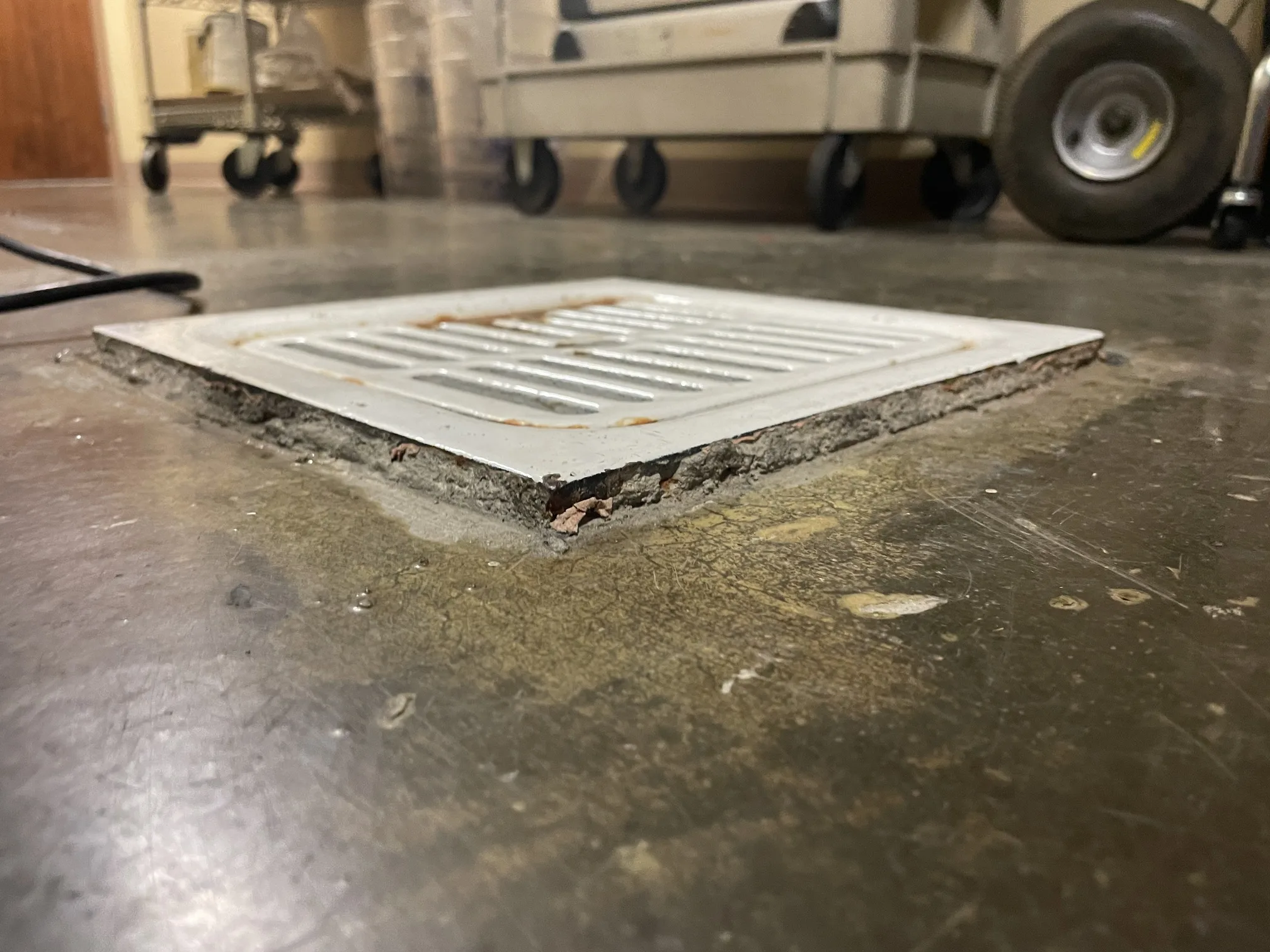
Rule This Out FirstEvery drain fixture has a P-trap — a U-shaped bend in the pipe that holds 2–4 inches of standing water. That water acts as a seal, blocking sewer gas from traveling up through the drain and into the building. When a fixture isn’t used for an extended period, the water in the trap evaporates, breaking the seal and allowing sewer gas to flow freely into the space. This is the single most common cause of sewer odor in commercial buildings — especially in vacant tenant suites, seldom-used restrooms, floor drains in storage areas, and seasonal spaces.
Most likely if: The affected fixture or drain hasn’t been used in weeks or months. The smell is localized to one drain or one room. Pouring water down the drain eliminates the odor. The space is a vacant suite, seasonal conference room, or storage area with a floor drain.
What to do: Run water in every drain in the affected area for 30 seconds to refill the P-trap. For floor drains in areas with no regular water use, add a small amount of mineral oil on top of the water — it creates an evaporation barrier that extends the trap seal for months. Add unused fixtures to your maintenance walk-through checklist so traps get refilled monthly.
Cracked or Deteriorated Sewer Line
Most Common in Pre-1980 BuildingsCast iron and clay sewer pipes deteriorate over time. Cracks, joint separations, and wall perforations allow sewer gas to escape from the pipe and migrate through the building structure — through walls, between floors, and into tenant spaces. The odor path follows the path of least resistance, so the smell may appear far from the actual crack. In pre-1980 buildings with original cast iron DWV systems, pipe deterioration is the most common cause of persistent, building-wide sewer odor that can’t be traced to a single fixture. A camera inspection of the sewer and drain lines is the only way to confirm the location and severity of the damage.
Most likely if: Building was constructed before 1985 with cast iron DWV piping. Odor is persistent and can’t be traced to a single dry trap. Odor is strongest near plumbing chases or walls containing drain stacks. Other signs of pipe deterioration are present — slow drains, discolored water, or visible corrosion at exposed fittings.
What the fix involves: Sewer camera inspection to locate cracks and assess pipe condition, followed by targeted repair or system replacement depending on scope. Sewer Camera Inspection →
Blocked or Damaged Vent Stack
Check If Odor Is Accompanied by Slow DrainsThe vent stack is a vertical pipe that runs from the drain system through the roof, allowing sewer gas to exhaust above the building and air to enter the drain system for proper flow. When the vent stack is blocked — by bird nests, leaves, roofing debris, or damaged during re-roofing work — sewer gas can’t escape through the roof and instead finds its way into the building through drain connections. A blocked vent also causes slow drainage and gurgling sounds at fixtures, because the drain system can’t draw air properly. If sewer odor and slow drains appeared simultaneously, a vent problem is the most likely explanation.
Most likely if: Sewer odor is accompanied by slow drainage or gurgling sounds. Odor or drain problems started after roofing work. Vent pipe on the roof is visibly obstructed or damaged. Odor is worse on upper floors (closer to the vent termination point).
What the fix involves: Roof-level vent stack inspection and clearing, verification of vent connections at each floor, and repair of any damaged or disconnected vent pipe sections. Drain Cleaning →
Failed Wax Ring or Fixture Seal
Check at Specific FixturesToilets connect to the drain flange with a wax ring that creates an airtight and watertight seal. Over time — especially in high-traffic commercial restrooms — the wax ring compresses, dries out, or shifts if the toilet rocks on an uneven floor. A failed wax ring allows sewer gas to seep out around the base of the toilet. The odor is localized to that specific restroom and is often stronger after flushing (when drain system pressure pushes gas through the compromised seal). Other fixture connections — sink tailpiece gaskets, shower drain seals — can fail similarly, though wax rings on toilets are the most common source.
Most likely if: Odor is localized to a specific restroom and strongest near the base of a toilet. The toilet rocks or is not firmly seated on the floor. Odor is intermittent and often worse immediately after flushing. Visible water staining or moisture around the toilet base.
What the fix involves: Toilet pull and reset with a new wax ring, inspection of the drain flange for damage, and verification of the closet bolt connection. Typically a 1–2 hour repair per fixture. Maintenance Program →
Grease Trap Decomposition
Check If Near Kitchen or Food ServiceGrease traps and interceptors capture fats, oils, and grease before they enter the sewer system. The captured grease sits in the trap and decomposes over time, producing hydrogen sulfide — the same gas that gives sewer odor its characteristic rotten-egg smell. An overdue grease trap doesn’t just smell — it can push odor back through kitchen drains into the building. In multi-tenant buildings with food service, a neglected grease trap in one tenant’s space can create odor complaints across the floor. California FOG regulations typically require pumping every 90 days, but high-volume restaurants may need monthly service.
Most likely if: Odor is strongest near the kitchen or food prep area. The grease trap hasn’t been pumped in 90+ days. Odor has a distinctly rotten or rancid quality rather than a dry sewer smell. Kitchen drains are also running slow (indicating the trap is full and restricting flow).
What the fix involves: Grease trap pumping, cleaning, and inspection. Assessment of trap sizing relative to food service volume. Establishment of a compliant pumping schedule. Grease Trap Service →
Missing or Damaged Cleanout Cap
Rule This Out FirstCleanouts are access points in the sewer system — typically 3″ or 4″ capped fittings installed at the base of drain stacks, at direction changes, and at the building’s sewer lateral. When a cleanout cap is missing, cracked, or improperly sealed, it creates a direct opening from the sewer system into the building or surrounding area. Sewer gas flows freely through the opening. This is one of the simplest causes on this list — and one of the most commonly overlooked. Cleanout caps get removed during drain service and not replaced, crack from age, or get knocked off during maintenance work in mechanical rooms.
Most likely if: Odor is strongest near a utility or mechanical area, a wall chase, or an exterior cleanout location. A recent drain cleaning service was performed (and the cap may not have been replaced). Visible cleanout fittings are missing their caps.
What the fix involves: Physical inspection of all cleanout locations in the building, replacement of any missing or damaged caps. Simple fix that should be part of any routine maintenance walk-through. Maintenance Program →