
Why Your Commercial Building Has Low Water Pressure — and How to Find the Cause.
Tenant complaints about low pressure rarely point to the municipal supply. In multi-story commercial buildings, pressure loss almost always traces to something between the meter and the fixture — corroded supply lines, a failing PRV, a restricted backflow device, or an underground leak bleeding off pressure before water reaches the building. Here are the six most common causes, how to identify which one you’re dealing with, and what each fix actually involves.
WHAT YOU'RE EXPERIENCING
The Symptoms Are the Same. The Causes Are Not.
Low water pressure in a commercial building shows up as weak flow at fixtures, long fill times on toilets, poor performance from water heaters and dishwashers, and tenant complaints that start on upper floors and spread. The symptoms are generic. But the root cause determines whether you need a $300 valve adjustment or a $150,000 repipe — which is why diagnosis matters before anyone picks up a wrench.
SYMPTOM PATTERN
Building-Wide Low Pressure
Every fixture in the building runs weak — all floors, all zones. Pressure is consistently low, not intermittent. Points to a building-level cause: the PRV, the main supply line, or a restriction at the meter or backflow device.
SYMPTOM PATTERN
Upper Floors Only
Ground-floor fixtures have acceptable pressure. Upper floors are weak, especially during peak usage. Points to supply line sizing, corroded risers restricting flow, or a PRV that can’t maintain setpoint under load.
SYMPTOM PATTERN
Intermittent Pressure Drops
Pressure is fine most of the time, then drops suddenly — during morning flush, when the water heater fires, or at random intervals. Points to expansion tank failure, a partially closed valve, or a supply leak that worsens under demand.
DIAGNOSIS — SIX ROOT CAUSES
Six Causes of Pressure Loss in Commercial Buildings.
Every pressure complaint we diagnose traces back to one of these six causes. The first five are building-side problems a commercial plumber can fix. The sixth is a municipal issue — and recognizing it saves you from paying for a service call you don’t need.
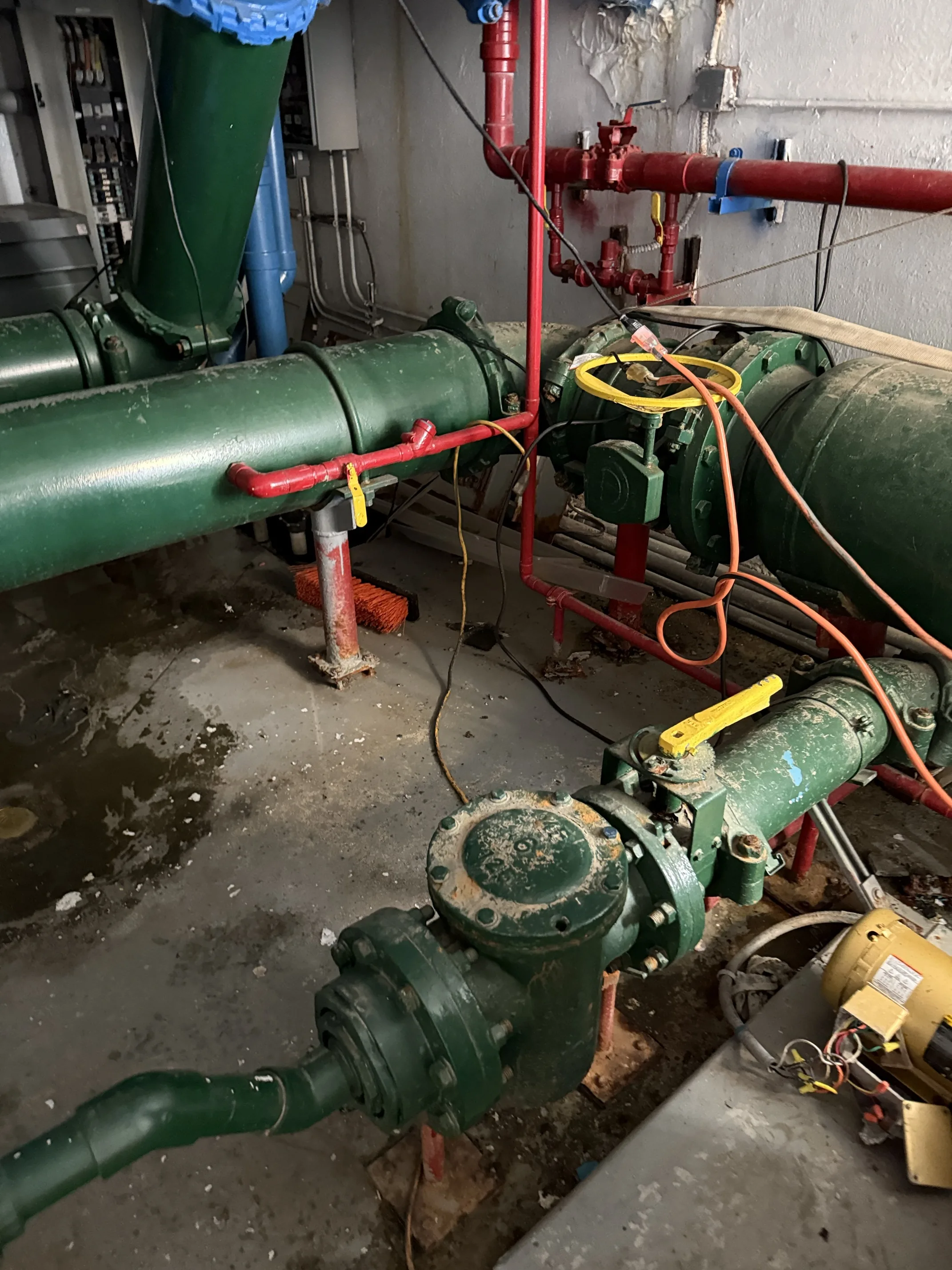
Galvanized Pipe Corrosion
Most Common in Pre-1980 BuildingsGalvanized steel supply lines corrode from the inside out. Over 30–50 years, mineral deposits and oxidation build up on the pipe walls, reducing the internal diameter from 3/4″ down to a fraction of that. The restriction is progressive — pressure drops gradually over years, not overnight. By the time tenants notice, the pipes are often 60–80% occluded. Brown or discolored water on first draw is the secondary confirmation.
Most likely if: Building was constructed between 1950 and 1980, pressure has degraded gradually over years (not suddenly), and you occasionally see rusty water at first draw in the morning.
What the fix involves: Full or partial supply line replacement. Repiping & Pipe Replacement →
PRV (Pressure Reducing Valve) Failure
Check First — Fastest to DiagnoseEvery commercial building receiving municipal water above 80 PSI has a pressure reducing valve at the point of entry. PRVs are mechanical devices with a spring-loaded diaphragm that regulates downstream pressure. When the diaphragm fails or the spring weakens, the valve can’t maintain its setpoint — downstream pressure drops, sometimes dramatically. A failed PRV can also cause pressure spikes that trip T&P relief valves on water heaters.
Most likely if: Pressure dropped building-wide and relatively suddenly (over weeks, not years), the building’s water heater T&P valve has been discharging, or pressure fluctuates throughout the day.
What the fix involves: PRV inspection, recalibration, or replacement. Maintenance Program →
Backflow Preventer Restriction
Check During Annual TestingBackflow prevention devices — RPZ assemblies, double-check valves — are installed on commercial water services to protect the public water supply. When check valves foul with debris, or a relief valve is partially stuck, the device restricts flow. The restriction creates a pressure drop between the meter and the building. If pressure problems started after a backflow device was installed, replaced, or serviced, this is the first thing to check.
Most likely if: Pressure loss coincides with recent backflow device installation or service, or the building has an RPZ assembly (which creates more pressure drop than a double-check by design).
What the fix involves: Inspection, cleaning, or component replacement. Backflow Testing & Certification →
Underground Supply Line Leak
Most Common in Pre-1980 BuildingsThe supply line between the water meter and the building runs underground — typically under pavement, landscaping, or slab. A leak in this line bleeds off pressure before water reaches the building. The leak may not be visible at the surface for months. If your water bill has increased AND pressure has dropped, an underground supply leak is the most likely explanation — you’re losing both volume and pressure simultaneously.
Most likely if: Water bill has increased at the same time pressure has dropped. Wet spots or unusually green patches appear near the supply line path. Pressure is low building-wide but meter flow rate is higher than expected.
What the fix involves: Electronic leak detection to locate the breach, then excavation and repair. Water Leak Detection & Repair →
Water Heater Expansion Tank Failure
Check If Pressure FluctuatesIn a closed-loop domestic hot water system (which most commercial buildings have, due to backflow devices preventing water from pushing back to the main), thermal expansion has to go somewhere. That’s the expansion tank’s job. When the bladder inside the tank fails, the system has no buffer for thermal expansion — pressure spikes when the heater fires and drops when it cycles off. The result is intermittent pressure fluctuation, not steady low pressure. T&P valve discharge is the secondary indicator.
Most likely if: Pressure fluctuates rather than being consistently low. T&P valve on the water heater discharges periodically. Pressure problems are worse during peak hot water demand.
What the fix involves: Expansion tank inspection and replacement, system pressure check. Water Heater Services →
Municipal Supply Issues
Rule This Out FirstWater districts occasionally reduce pressure during main repairs, infrastructure upgrades, or emergency shutdowns. If every building on your block has the same problem, it’s not your building — it’s the supply. Check your water district’s outage map or call their operations line before scheduling a service call. This is the one cause on this list that isn’t a plumbing service — but knowing to check it first can save you a diagnostic visit.
Most likely if: Pressure dropped suddenly, neighboring buildings report the same issue, or your water district has posted a service advisory.
What to do: Contact your water district’s operations line. Most SoCal districts — including Irvine Ranch Water District, City of Anaheim, and Municipal Water District of Orange County — maintain online outage maps and 24-hour phone lines for pressure complaints.